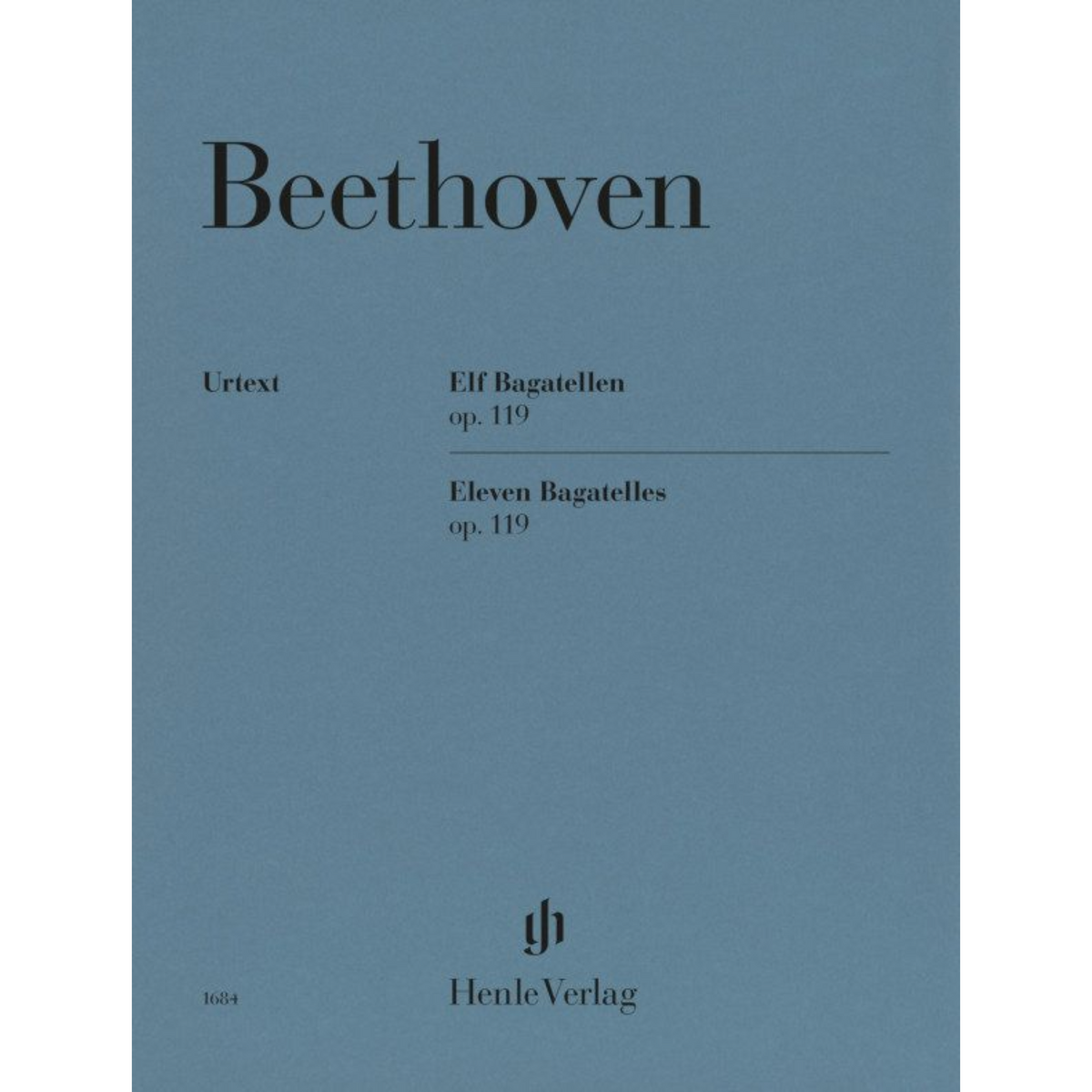
G. Henle Publishers stands for Urtext sheet music of the highest quality. The Urtext editions not only provide the undistorted and authoritative musical text but are also aesthetically pleasing, optimised for practical use and extremely durable. And then there is the strong, distinctive blue profile: (almost) all of the Urtext editions are bound in the characteristic blue cardboard.
Musicians trust Henle's blue Urtext editions because they:
- provide an undistorted, reliable and authoritative musical text
- offer superb, aesthetically appealing music engraving
- are optimised for practical use (page turns, fingerings)
- are of high quality and durable (cover, paper, binding)
- contain a short preface that introduces the work (particularly useful for AMEB exams) in German, English and French, as well as explanatory footnotes for particularly interesting passages in the score
- contain a description of the sources, an evaluation of the sources, readings and a documentation of the corrections made (= "Critical Report") in German and English, and often also in French
After the publication of his Bagatelles op. 33 in 1803, Beethoven returned to this genre again only twenty years later. The stimulus came from outside, twice: on the one hand, he received a request in 1820 to supply pieces for a piano method; on the other hand, in 1822 the Peters publishing house asked for “solo pieces for piano,” whereupon Beethoven offered “bagatelles or trifles”. These two groups of Bagatelles (nos. 1–6 as revisions of older pieces for Peters and nos. 7–11 for the piano method) were ultimately published in London in 1823 in the order known today – whether this was done with Beethoven’s consent remains a matter of debate to this day. In any case, they enjoy great popularity among amateurs and professionals alike owing to their variety of characters and their moderate level of difficulty.
Within the scope of a revision of all of Beethoven’s Bagatelles, Henle Publishers took the opportunity to offer opus 119 for the first time as a single Urtext edition. The music and detailed texts reflect the current state of research. Editor Joanna Cobb-Biermann took advantage of a significantly expanded range of sources.