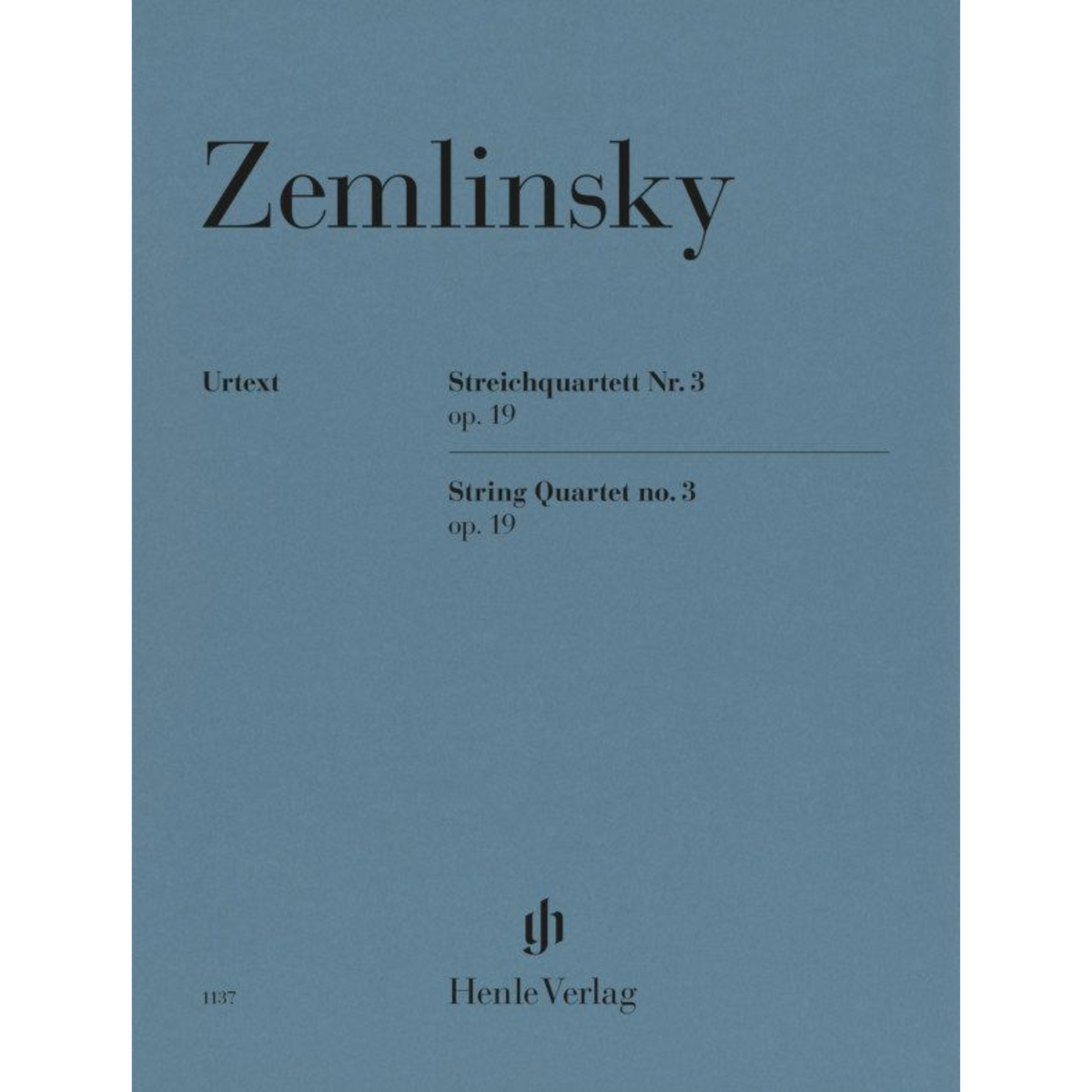
G. Henle Publishers stands for Urtext sheet music of the highest quality. The Urtext editions not only provide the undistorted and authoritative musical text but are also aesthetically pleasing, optimised for practical use and extremely durable. And then there is the strong, distinctive blue profile: (almost) all of the Urtext editions are bound in the characteristic blue cardboard.
Musicians trust Henle's blue Urtext editions because they:
- provide an undistorted, reliable and authoritative musical text
- offer superb, aesthetically appealing music engraving
- are optimised for practical use (page turns, fingerings)
- are of high quality and durable (cover, paper, binding)
- contain a short preface that introduces the work (particularly useful for AMEB exams) in German, English and French, as well as explanatory footnotes for particularly interesting passages in the score
- contain a description of the sources, an evaluation of the sources, readings and a documentation of the corrections made (= "Critical Report") in German and English, and often also in French
The string quartets by Viennese composer Alexander Zemlinsky number among the most important contributions to the genre in the first half of the twentieth century. The Third String Quartet op. 19, composed in 1924, shows the mature master at the height of his creativity. The difference to the highly expressionistic Second String Quartet, written ten years earlier, could hardly be greater. With its four-movement form, an often linear style of writing and the ironic detachment of its tone, Zemlinsky’s op. 19 takes up the then current neoclassical tendencies of the 1920s. For this Henle Urtext edition, it was possible to consult the autograph score, the engraver’s copy proofread by the composer and the first edition, so that the edition is based on an optimal source foundation. The editorial work was generously supported by the Alexander Zemlinsky Fund, Vienna.